

By James Pepper, CEO, Vista Technology Support
Retail in the UK continues to face one of its most turbulent periods in decades. Rising operational costs, supply chain pressures, and shifts in customer behaviour were already enough to contend with, but theft – both opportunistic and organised – has now become one of the most damaging threats to profitability and colleague safety.
This isn’t a short‑term spike. It’s a structural issue affecting every corner of the sector, from supermarkets and convenience stores to fashion, pharmacies, and hospitality.
The Scale of Retail Crime Today
The latest figures paint a stark picture. According to the British Retail Consortium (BRC), retailers faced more than 20 million theft incidents last year, with the direct cost of stolen goods hitting £2.2 billion – the highest ever recorded. The BRC also highlights that retailers are now spending a further £1.8 billion annually on crime prevention measures, effectively doubling the financial burden.
The Office for National Statistics (ONS) reports that police‑recorded shoplifting reached over 530,000 offences in the year to March 2025 – a 20% rise and the highest level since records began. In the convenience sector alone, the Association of Convenience Stores (ACS) identified more than 6.2 million theft incidents in the past 12 months.
Perhaps most concerning is the rise in violence. The BRC notes over 2,000 incidents of violence and abuse against retail staff every single day – more than double pre‑pandemic levels. Assaults involving weapons are also increasing, creating an environment where staff are expected to operate under real personal risk.
This isn’t just a retail crisis – it’s an economic one. Analysts referencing research by organisations such as Police Exchange suggest that the broader economic impact of shoplifting, fraud, and related crime could be costing the UK over £170 billion a year when factoring in lost revenue, reduced investment, increased insurance, policing burden, and effects on local communities.
What’s Being Stolen Most Often?
The items most frequently targeted reflect a mix of necessity, resale value and organised criminal demand:
Alcohol
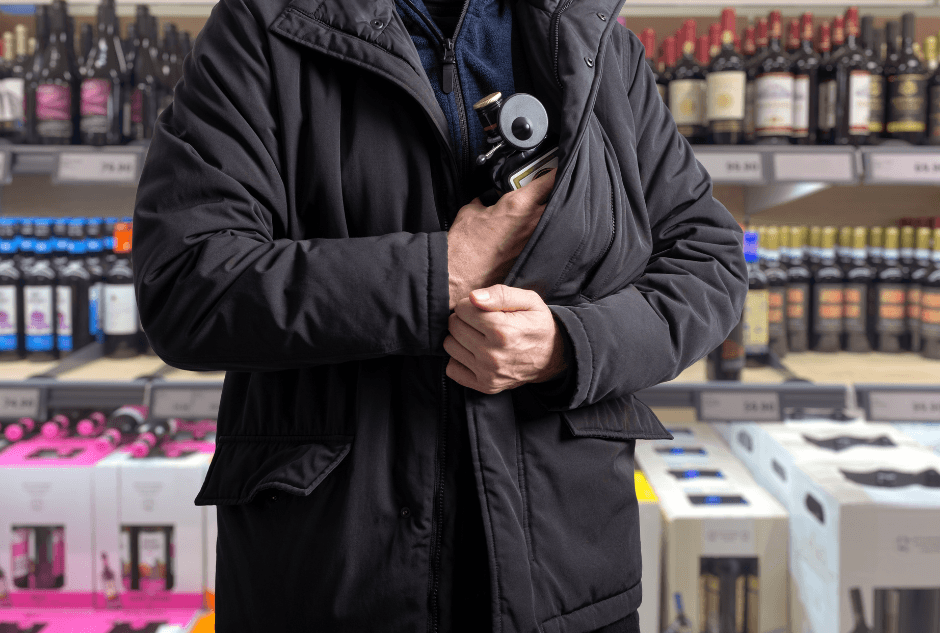
Premium spirits like gin, whisky and vodka continue to top the list. Their high resale value and small form factor make them easy to conceal and sell quickly on illicit markets.
Beauty and Cosmetics
Luxury makeup, skincare and fragrances are consistently stolen. Their compact size and strong online resale value make them a favourite for both individuals and organised retail crime groups.
Premium Food Items
Steak, cheese, seafood and baby formula are increasingly targeted. In many cases, these items are stolen “to order”, often ending up in pubs, restaurants, and online groups selling discounted grocery goods.
Over‑the‑Counter Medicines and Supplements
Painkillers, cold remedies, vitamins and protein powders remain common targets. Some offenders steal them to resell locally; others because rising living costs make basic medicines unaffordable.
Small Electronics
Phone accessories, headphones, smart devices and chargers are easy to hide and very easy to sell. With no activation lock or digital tracking, these products carry a lower risk for offenders.
The pattern shows a blend of economic pressure and professionalisation of crime — a dual challenge requiring different interventions.
How Theft is Evolving in 2025/2026
Retailers and crime experts are identifying several clear trends:
Organised Retail Crime (ORC)
Small, coordinated groups are targeting multiple stores in a day – often using distraction, speed, or “sweep‑the‑shelf” tactics. These groups operate regionally, with intelligence showing offenders travelling across county lines to avoid detection.
Travelling Offenders
Offenders increasingly use public transport networks to move quickly between vulnerable towns, creating patterns that localised security systems struggle to track.
Rising Violence and Threats
Confronting offenders, even politely, now frequently triggers aggression. Delivery drivers are also impacted, with industry surveys showing more than three‑quarters experiencing abuse in the last year.
Growth in Fraud‑based Crime
Return fraud, online refund abuse, e‑commerce chargebacks and loyalty fraud are rising faster than physical theft. In some categories, fraudulent returns account for 15% of all return activity, according to retail fraud analysts.
High‑speed “Sweep and Bag” Thefts
Groups rapidly clearing entire shelves of meat, medicine or chocolate are becoming more common, making traditional deterrents far less effective.
Technology: How Retailers Are Fighting Back
Loss prevention is undergoing a transformation, with retailers shifting from reactive measures to predictive, data‑driven strategies. The technologies being adopted are more intelligent, more integrated, and increasingly automated.
AI‑Powered Video Analytics
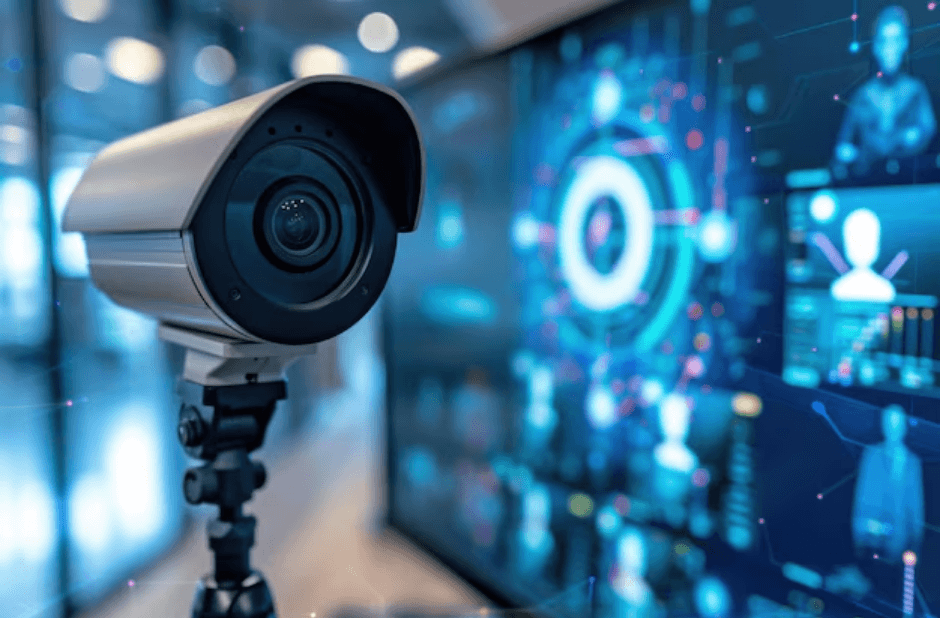
AI now sits within existing CCTV systems, analysing footage in real time. Instead of relying on a human operator, the system detects concealed items, suspicious movement patterns, checkout skipping or unusual interactions with shelves.
These platforms use machine‑learning models trained on thousands of theft scenarios – meaning the system becomes more accurate over time.
Trigo’s AI-powered store automation platform enables retailers to transform traditional stores into fully or partially autonomous environments by using ceiling-mounted cameras and advanced computer vision. The system tracks shoppers and products in real time, allowing customers to simply pick up items and leave, with purchases automatically charged to their accounts – eliminating the need for traditional checkouts. This approach not only enhances convenience but also reduces opportunities for theft, as every product movement is monitored and linked to a shopper profile, making unauthorized removal of items significantly more difficult.
NanoBTtechnology
NanoBT technology deployed by Nexite technology assists retailers in combating theft and fraud by utilizing advanced wireless tags and real-time data analytics.
Unlike traditional RFID, Nexite’s “NanoBT” tags continuously transmit item-level information, enabling retailers to track products both in-store and post-sale.
This persistent connectivity allows for highly accurate inventory management, immediate detection of suspicious product movements, and more effective loss prevention strategies. By integrating seamlessly with existing systems,
Nexite helps retailers respond proactively to organized retail crime, sweep thefts, and fraud-based incidents without compromising the customer experience.
Smart Retail Fixtures
Systems like gravity‑feed risers, pusher shelves and limited‑access dispensers physically restrict how many items can be taken at once.
They’re designed to slow or prevent “sweep thefts” without locking products behind glass, helping retailers maintain a good customer experience.
For instance, HL Display is widely acknowledged as a leading supplier of smart retail fixtures, providing products such as gravity-feed shelf management systems and pusher trays.
These solutions automatically move items to the front of the shelf as products are taken, ensuring optimal presentation and limiting the number of products a customer can access at one time.
Retailers across Europe and the UK have adopted HL Display’s systems to deter bulk thefts while still offering a convenient shopping experience.
Facial Recognition for Repeat Offenders
Where used responsibly, facial recognition helps security teams identify known offenders as soon as they enter the store.
The technology matches faces against a secure, controlled watchlist, enabling faster intervention and reducing risk to staff.
One of the leading retail facial recognition technology providers is Facewatch. Facewatch is widely recognized for offering cloud-based facial recognition solutions specifically designed for retail environments.
Their technology enables retailers to identify known offenders in real time, enhancing store security while adhering to privacy regulations.
Other notable providers in the sector include NEC and AnyVision, both of which offer advanced facial recognition systems that are used by retailers around the world. These companies focus on delivering accurate identification, ease of integration with existing security infrastructure, and robust data protection protocols.
Data Sharing Platforms
Systems like Disc enable retailers to share intelligence on offenders across towns and regions, helping track travelling offenders and connect patterns that individual stores cannot see alone.
Staff Safety Tech and Wearables
Panic buttons, lone‑worker alarms and discreet communication devices provide colleagues with immediate support when dealing with aggressive customers or security incidents.
Leading wearable technology providers such as Axon and Safeguard Systems have demonstrated a measurable impact on reducing theft and assaults on retail staff through the deployment of body-worn cameras and personal safety devices.
These wearables not only serve as a deterrent for criminal behaviour but also provide real-time incident recording and rapid response capabilities, further enhancing the safety and security of retail environments.
Vista’s Perspective: Where Retail Must Go Next
As a technology partner to major UK brands, we see three critical priorities for retailers moving forward:
- Connect the Systems You Already Have
Most retailers aren’t short of technology – they’re short of integration.
AI, CCTV, RFID, POS data, analytics, self‑checkout systems and workforce tools must work together. The future of shrink reduction lies in unifying these systems into one intelligent ecosystem.
- Focus on Protecting People, Not Just Products
The retail colleague experience has fundamentally changed. Safety and wellbeing need to be at the centre of all loss‑prevention strategies. Technology should reduce confrontation, not drive it.
- Move From Reactive to Predictive Loss Prevention
The future is about preventing incidents before they occur.
This means adopting behavioural AI, regional intelligence sharing, predictive analytics and connected systems that intervene automatically — not just reviewing footage after the fact.
Final Thoughts
The loss prevention landscape in the UK has changed more in the past three years than in the previous twenty. Theft is more frequent, more organised and more aggressive — but the industry is responding with smarter technology, better data and a renewed focus on safety.
Retailers who embrace modern, integrated and predictive loss‑prevention strategies will not only reduce shrink, but also improve colleague safety, strengthen customer trust, and build more resilient stores.
To learn more about how Vista can help your business reduce loss prevention, how we assist retailers in making the right technology investments to address the biggest challenges, visit vistasupport.com or follow us on LinkedIn for the latest insights and updates.
Reach out to one of our experts today: consulting@vistasupport.com / 0330 135 579
Find out more about our other services here!